RoundupBeginner guides
Best Beginner Aquarium Kits in the UK
All-in-one tanks that get you cycling—not just unboxing
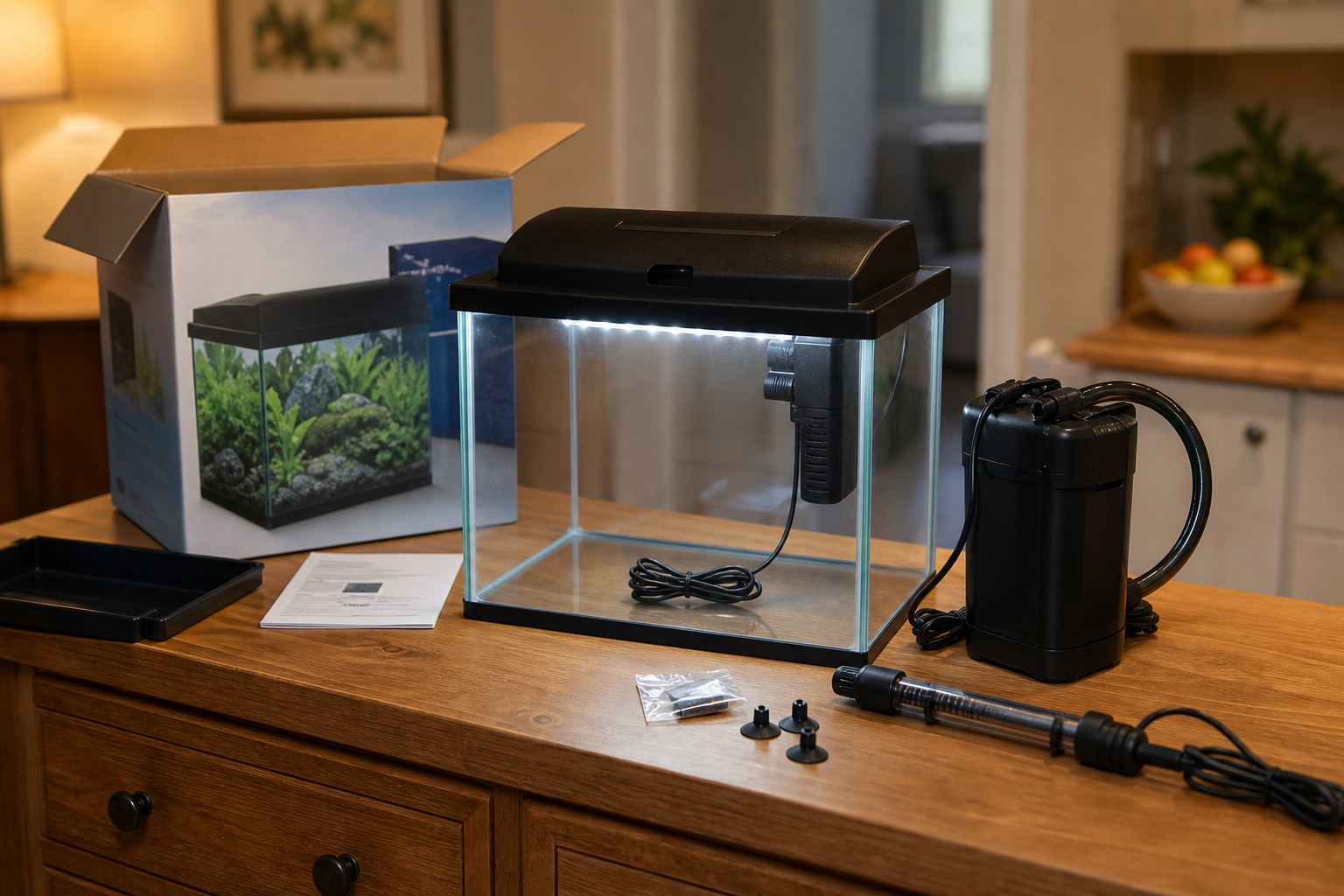
Kits sell the dream; you still need the boring bits
Walk into any UK aquatics shop and a boxed kit promises an instant aquarium. What the photo rarely shows is the heater, test kit, and dechlorinator sitting in your basket next to the box.
A first-timer at a Saturday club meet-up said the shop had offered to bag six neon tetras with the kit— they declined, cycled for five weeks, and still lost two fish to a nitrite spike in week six because they had skipped testing. The kit was fine; the timeline was not.
Good kits give you a leak-tested tank, adequate filtration, and lighting that won't melt plastic plants. Great kits do that without locking you into overpriced consumables.
Our top pick at a glance
For most first-time tropical keepers, a 54–60 litre kit from Marina or Fluval plus a separately bought heater and liquid test kit beats the cheapest all-in-one on the shelf. Spend the savings on water testing—not decorative gravel.
Our picks
Best overall
Fluval Flex 57L
Fluval
Usually £120–£150
Curved front and built-in filtration look polished on day one—the hidden trade-off is proprietary media cartridges that cost more than generic sponge over three years.
View on Amazon (paid link) (paid link)Budget pick
Marina Starter 54L
Marina
Usually £80–£100
Sensible footprint and straightforward gear that shops know how to support—light output is adequate for hardy plants, not a high-tech aquascape.
View on Amazon (paid link) (paid link)Aqua One AquaNano 40
Aqua One
Usually £90–£110
Compact cube suits desks and bedrooms, but 40 litres limits stocking once you catch the hobby bug.
View on Amazon (paid link) (paid link)Premium pick
Juwel Rio 125
Juwel
Usually £350–£450
Cabinet, lighting, and filter integration that lasts years—the premium spend only hurts if you never open the filter for maintenance.
View on Amazon (paid link) (paid link)
What matters most in a beginner kit
Volume first: 54 litres minimum for a small community. Filter turnover rated at four to six times tank volume. Lighting adequate for viewing, not necessarily carpet plants.
Check replacement media availability in your local shop before you fall for a proprietary cartridge system.
Kits we recommend
Each pick assumes UK delivery and spare parts you can source without importing. We note what is missing from the box so your first shop trip is one trip, not three.
After the unboxing glow fades
Integrated filters hide grime until flow drops. Open the compartment in week two—not month six—to learn how your specific kit rinses.
One keeper with a Fluval Flex only discovered the filter intake slot was half blocked by a plastic plant stem six weeks in—flow had dropped slowly enough that they blamed the fish looking 'lazy'. A five-minute rinse fixed it.
LED hoods on budget kits fade slowly. If plants stretch upward and algae wins, upgrade lighting in year two rather than blaming your water.
Budget the hidden basket
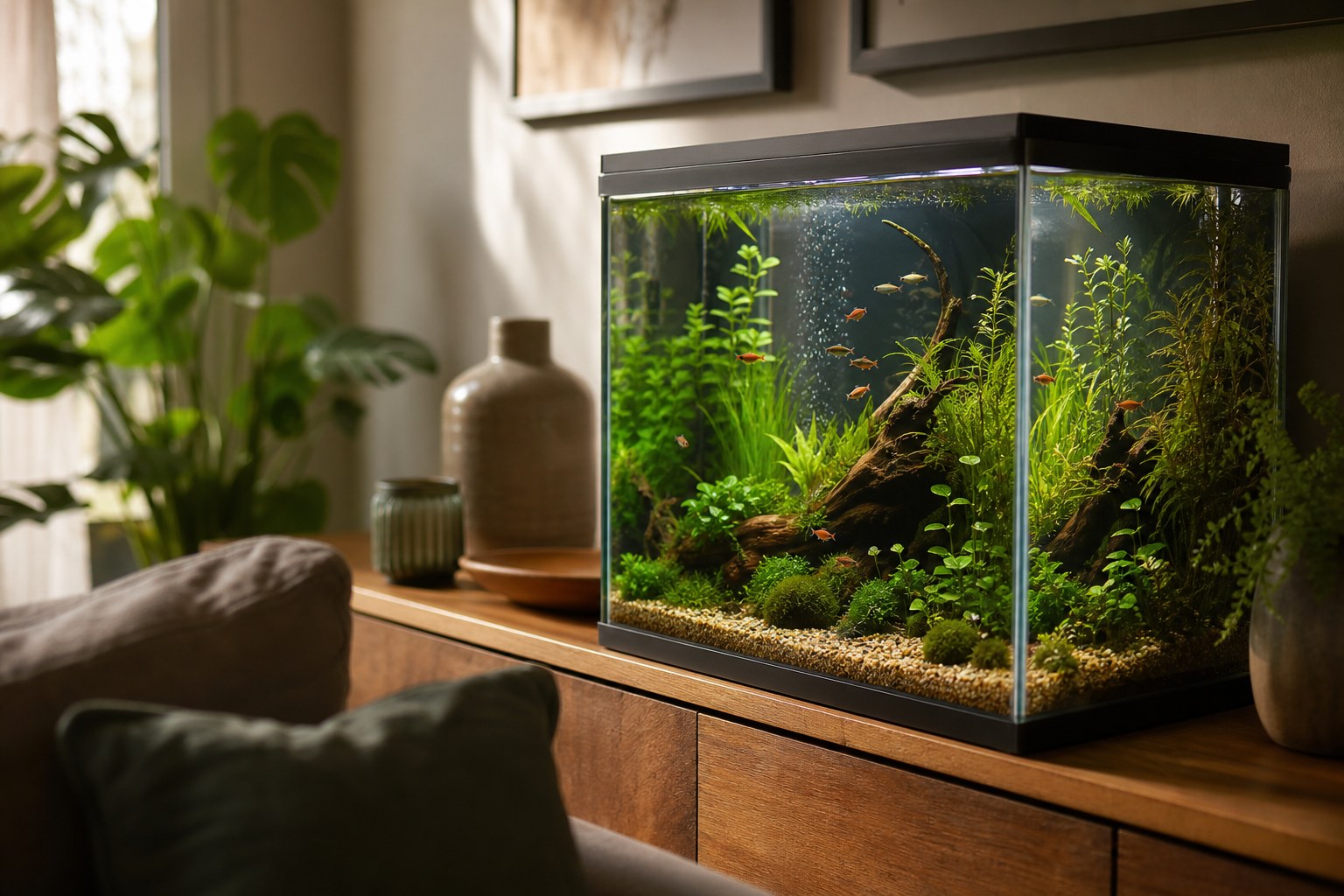
Plan roughly £60–£80 beyond the kit price: heater, thermometer, liquid tests, dechlorinator, bucket, and siphon. Skipping any of these is how kits become graveyards.
A stand or cabinet must hold roughly one kilogram per litre once filled.
Final thoughts
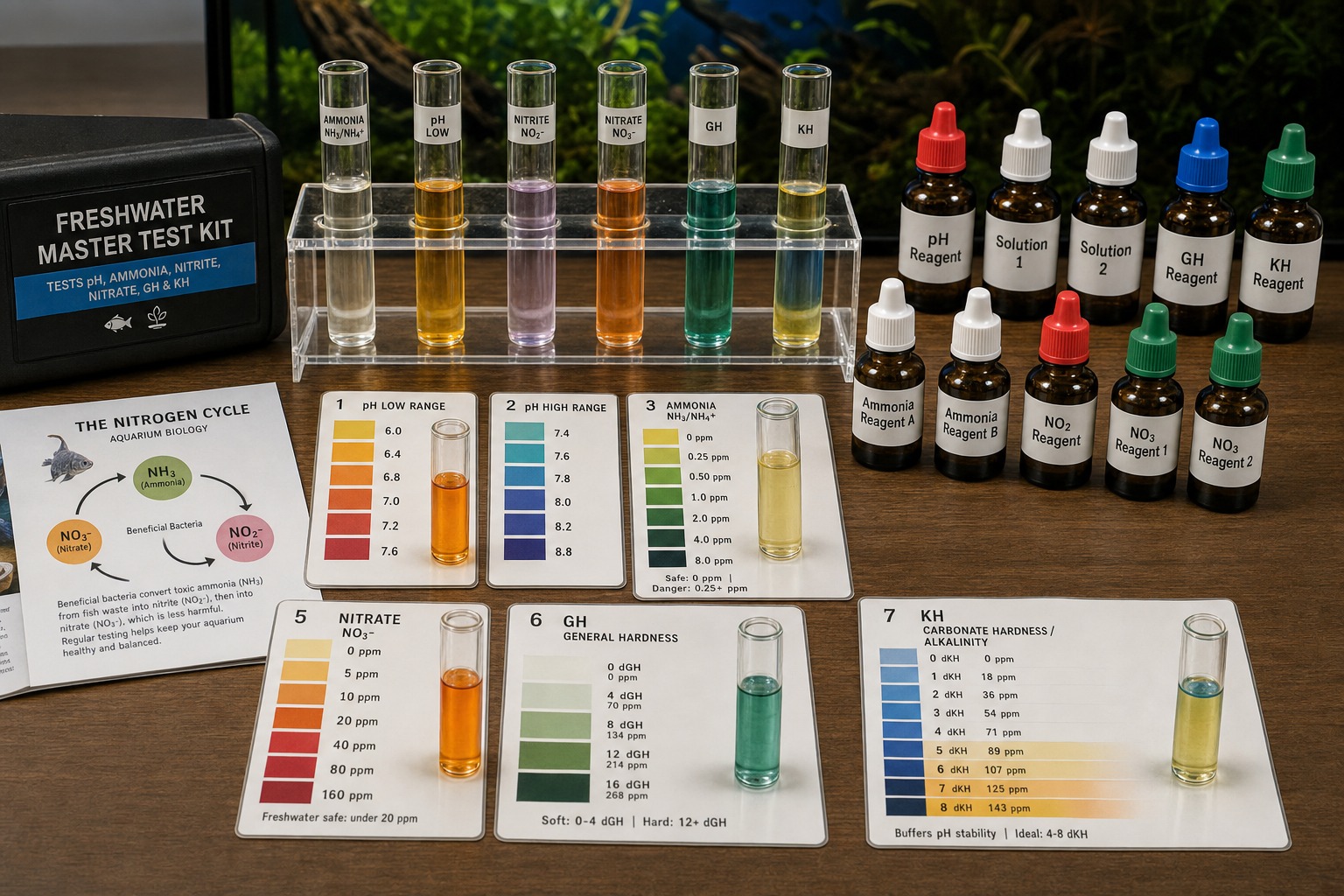
Pick volume and filter access over gimmick lighting. Buy the heater before fish. Test water weekly until nitrate tells you the cycle finished.
A kit is a shortcut to plumbing—not to biology.
Common questions
Do beginner kits include heaters?
Most UK kits omit heaters. Budget £20–£40 for a correctly sized heater and a separate thermometer before buying fish.
Is 40 litres enough for a first tropical tank?
Yes for a small group of hardy fish with careful feeding. Sixty litres or more forgives beginner mistakes and supports a proper corydoras group.
Can I use tap water straight away with a kit?
Only with a dechlorinator matched to your supplier's treatment. Kits rarely include test kits—add a liquid freshwater master kit before cycling.