RoundupEquipment
Best Aquarium Heaters for Tropical Community Tanks
Steady warmth for tetras, corydoras, and everyday living-room setups
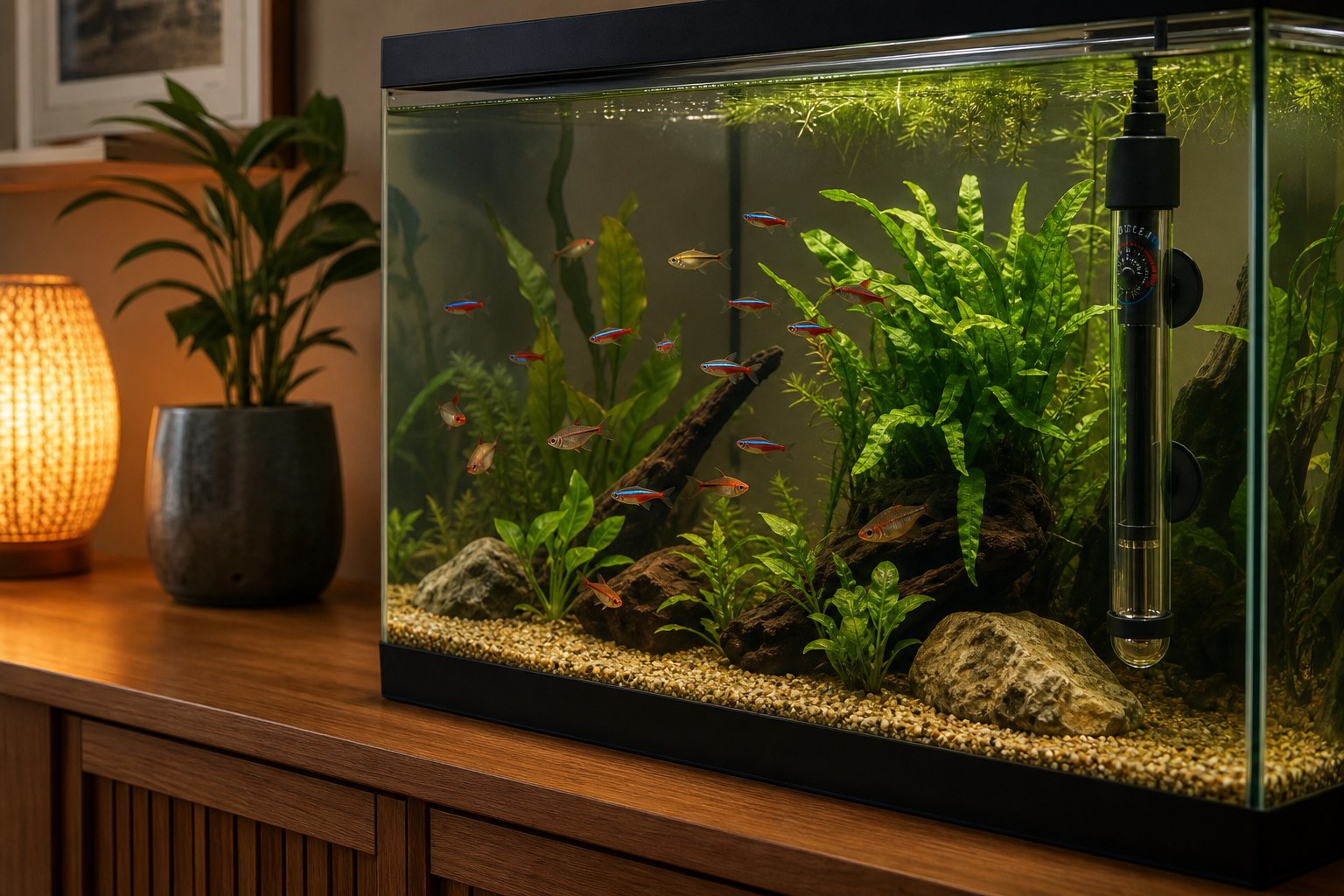
Tropical fish feel room temperature long before you do
Community tetras and corydoras expect stable warmth. UK lounges drop overnight; conservatories swing with the weather. A heater's job is replacing heat lost through glass and open tops—not fighting a draughty room with an undersized element.
A keeper in a north-facing bedroom told us their 100 W heater clicked on constantly through January while the thermometer still read 23°C at the substrate. Stepping up to 150 W stopped the all-night cycling.
The best heater is the one correctly sized, verified with a thermometer, and replaced before it sticks on.
Our top pick at a glance
For a typical 80-litre community tank in an average UK room, a 100 W glass heater from a mainstream brand plus a separate thermometer covers most keepers. Size up if the tank sits below 18°C or against an external wall. Keep a spare smaller heater for quarantine—it doubles as emergency backup.
Our picks
Best overall
Tetra HT Heater 100W
Tetra
Usually £18–£25
Ubiquitous on UK shelves and easy to replace in a pinch—the dial markings are approximate enough that you must verify with a thermometer.
View on Amazon (paid link) (paid link)Interpet Delta Therm Heater 150W
Interpet
Usually £22–£30
Solid UK brand support and steady thermostats, though the length can look awkward in shallow 40-litre tanks.
View on Amazon (paid link) (paid link)Premium pick
Fluval E200 Electronic Heater
Fluval
Usually £45–£55
Digital readout removes guesswork after water changes—the premium price hurts when you still need a backup heater in the cupboard.
View on Amazon (paid link) (paid link)Budget pick
Marina Compact 50W
Marina
Usually under £15
Fits nano and quarantine tanks neatly, but will run constantly in a room below 18°C—undersizing shows up as cold spots after partial water changes.
View on Amazon (paid link) (paid link)
What matters most in heater choice
Wattage headroom matters more than brand prestige. A heater running constantly is working at its limit; one that cycles gently has room for cold snaps.
Length must fit your tank depth. Thermostat accuracy varies—treat dial numbers as starting points, not promises.
Heaters we recommend
Picks reflect UK availability, sensible warranty routes, and what experienced keepers replace after failures. Labels mark primary, budget, and premium tiers for typical community setups.
What experienced keepers watch for
Thermostats drift over years. If your heater never switches off, unplug it and replace it—do not adjust fish to 28°C.
After a partial water change, one keeper found corydoras hugging the bottom while the display thermometer still looked fine—the cold tap layer had pooled near the substrate until the heater caught up. Give the heater thirty minutes before trusting a reading after changes.
Digital displays help; independent thermometers still win for peace of mind.
Redundancy without overspending
A £15 compact backup in the cupboard beats losing a tank to a stuck heater. Set the backup one to two degrees lower so it only engages if the primary fails.
Used heaters from marketplace listings are false economy—thermostats fail silently.
Final thoughts
Buy wattage for your room, verify with a thermometer, and plan for replacement every few years. A steady 24–26°C matters more than a premium brand badge.
When in doubt, size up slightly and use a controller—or keep that backup heater ready.
Common questions
Should I buy two heaters for one tank?
For display tanks over 80 litres, many UK keepers run a primary heater plus a smaller backup set two degrees lower. Redundancy beats a single failure on a winter night.
Where should the heater sit in the tank?
Near filter outflow for even distribution, fully submerged with the minimum water line covered. Never switch on while exposed to air.
Are glass heaters safe?
Modern units with shatter-resistant glass and overheat cut-offs are fine when undamaged. Unplug during maintenance and replace if the glass cracks or the seal looks worn.