GuideDiscus
Discus Water Parameters and Quality
Temperature, pH, hardness, nitrates and RO blending for UK tap water
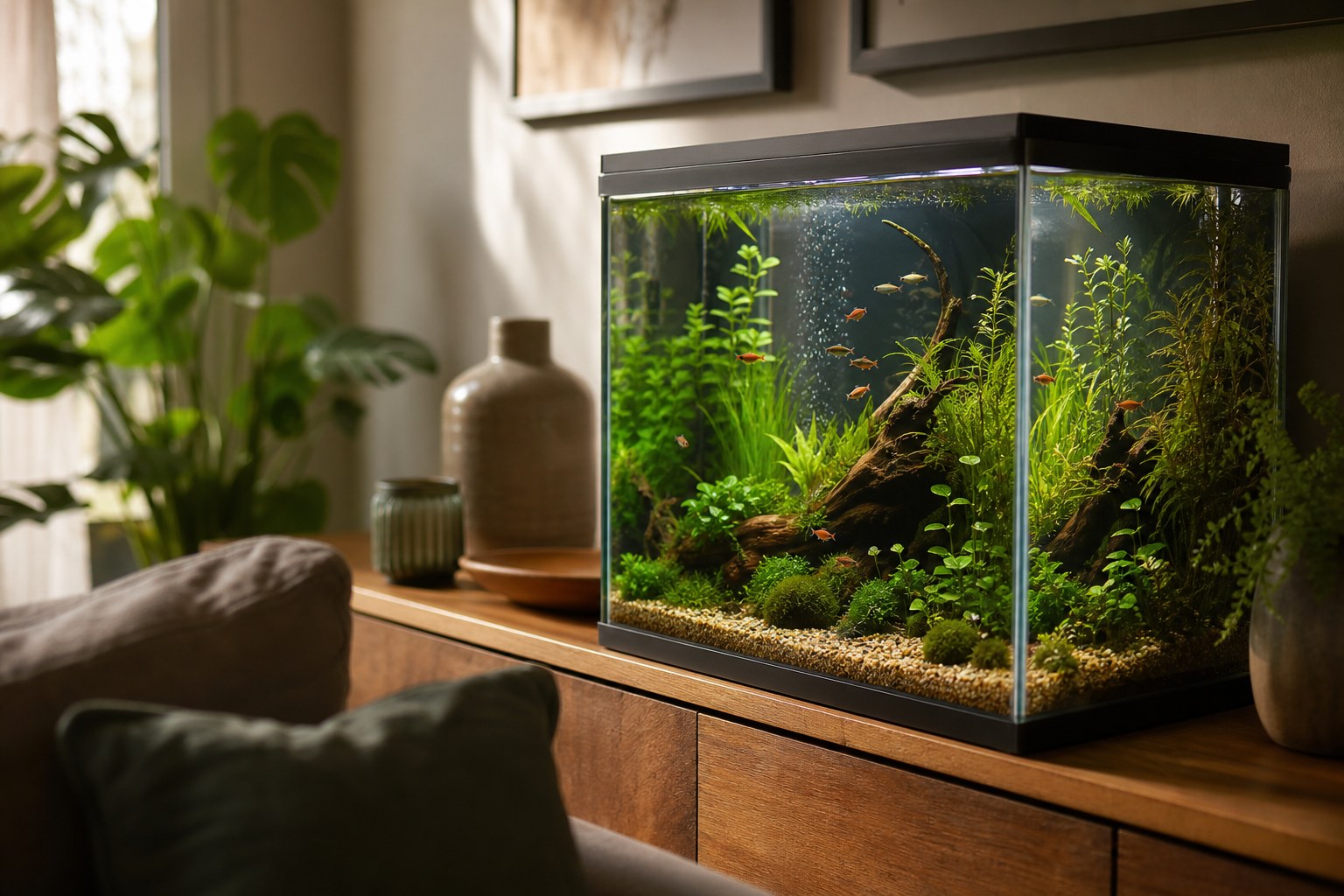
Clean, warm and soft—on purpose
Discus are not fragile because they are fashionable; they are demanding because Amazonian soft water, high temperature, and dense feeding collide in a glass box. UK mains water is often hard, chloraminated, and colder than you think when it leaves the tap in winter.
This guide sets practical targets for temperature, pH, hardness, nitrogen compounds, and change routines. It also covers RO remineralisation without turning your cupboard into a chemistry lab. Pair it with tank sizing—parameters cannot rescue an overcrowded shoal—and with disease prevention when readings drift.
Target ranges at a glance
General keeping: 82–86°F / 28–30°C, pH 6.0–7.0, hardness about 1–4 dKH (roughly 18–70 ppm), ammonia and nitrite zero, nitrate under 20 ppm. Juveniles on a growth programme: 86–88°F / 30–31°C with larger, more frequent water changes. Always remove chlorine and chloramine before water hits the tank.
Temperature for keeping versus grow-out
Adult display fish sit comfortably at 82–86°F / 28–30°C. That band supports appetite and immune function without cooking oxygen out of the water as aggressively as the top of the grow-out range.
Raising juveniles harder often means 86–88°F / 30–31°C. Metabolism and growth accelerate, but so do waste production and oxygen demand. Increase surface agitation, verify heaters with an independent thermometer, and never combine peak temperatures with skimpy water changes.
UK summers complicate the upper end: discus already live near heatwave danger. See the heatwave management guide before you permanently set 31°C in a conservatory. Dual heaters at staggered setpoints reduce single-point failure; dials lie, probes less so.
pH, hardness and soft-water reality
Captive-bred discus usually accept pH 6.0–7.0 if the value is stable. Wild fish and stubborn breeding pairs may prefer the acidic end; crashing pH overnight with acid buffers is worse than a steady 6.8.
Hardness targets around 1–4 dKH (approximately 18–70 ppm as calcium carbonate equivalent for that soft band) keep osmotic stress low. GH should stay soft-to-moderate depending on your remineraliser recipe—follow the product maths and test, do not chase zero KH unless you understand CO2 and pH swings.
UK hard tap (often well above these figures) is why RO systems appear in serious discus rooms. Blend RO with dechlorinated tap to soften gradually, or remineralise pure RO to known GH/KH. Sudden swings from 18 dKH tap to pure RO in one change shock fish as badly as chronic hardness.
Nitrogen cycle: ammonia, nitrite and nitrate
Ammonia and nitrite must be zero—always. Warm water and heavy feeding make an immature filter deadly within hours. Fishless cycle with ammonia or a mature media transfer before discus arrive.
Nitrate is the dial you turn with water changes. Keep it below 20 ppm for colour, appetite, and long-term organ health. Readings climbing past that after a feed-heavy week mean larger changes or less food, not a new bottle of “nitrate remover” as your primary strategy.
Test liquid reagents weekly on established tanks, daily on new cycles and hospital systems. Strips are fine for rough trends; do not medicate on strip optimism alone.
Water changes, chlorine and RO workflow
Maintenance displays: 10–25% weekly as a floor, more when nitrates climb or you feed grow-out rations. Breeding and juvenile programmes often use 25–50% daily or every other day—labour is the price of rapid growth.
Match new water temperature within a degree or two and treat every drop of tap with a conditioner that handles chlorine and chloramine. UK utilities commonly use chloramine; a basic dechlorinator that only claims chlorine is not enough.
RO workflow: collect RO, remineralise to target GH/KH, heat in a clean barrel if needed, then add. Label barrels. Never store untreated tap “for later” in sunlight. Log change percentages and nitrate—patterns beat memory when something goes wrong.
UK tap water, RO blending and remineralisation maths
English hard-water regions (much of the South East, Midlands chalk belts) routinely exceed discus hardness comfort. Scottish and some Welsh supplies can already be soft—test before you buy an RO unit you do not need. A £15 GH/KH kit saves hundreds in unnecessary membrane systems.
When RO is warranted, decide between two workflows. Blend: mix RO with dechlorinated tap until GH/KH land in your soft band, then heat. Remineralise: start from pure RO and add a measured remineraliser to published discus or soft South American targets. Blending is cheaper where tap is only moderately hard; remineralising is more repeatable when tap chemistry swings seasonally.
Dose by measurement, not vibes. Mix a batch in a food-safe barrel, test, then adjust. Log litres of RO versus tap. A 50/50 blend that worked in March may fail in August if your utility changes source water. Re-test monthly.
Chloramine on UK mains is common. Conditioners that only claim chlorine leave bound ammonia risk. Use products that explicitly list chloramine. Dose for the full volume of new water before it enters the tank—not “a splash in the bucket after I already poured half.”
Heating new water matters. Winter tap can sit near 5–10°C. Adding 20% ice-cold water to a 29°C discus tank is a shock event even if chemistry matches. Pre-heat in a barrel with a spare heater, or mix carefully while watching a thermometer in the stream.
Troubleshooting parameter problems
Ammonia or nitrite above zero: stop feeding or feed minimally, change water with matched conditioned water, check for dead fish behind wood, and verify the filter was not rinsed in hot tap water. Do not add more discus. Consider seeding media from a healthy tank if biology crashed.
Nitrate climbing past 20 ppm despite weekly changes: increase change volume or frequency, reduce feeding waste, vacuum mulm, and confirm your test kit has not expired into permanent “low” optimism. Overstocked grow-out tanks simply need daily changes—there is no gadget that replaces the bucket.
pH crashing overnight in low-KH water: you are under-buffered. Raise KH slightly within soft targets, avoid pure RO without remineralisation, and be careful with CO2 injection in planted discus tanks. Stability beats a heroic 5.8 that swings to 5.2 by morning.
Cloudy water after large changes: bacterial bloom from organics—reduce food, increase aeration, keep filtering, and avoid medicating cloudiness as if it were a parasite. White dust clouds differ from green algae blooms; diagnose before you dose.
Temperature instability: replace failing heaters, add dual sticks, move tanks off exterior walls, and never trust the heater dial alone. A two-degree overnight swing is enough to suppress appetite and invite opportunistic infection.
Parameter targets for display, grow-out and breeding
Display adults: 82–86°F / 28–30°C, pH roughly 6.0–7.0, soft KH around 1–4 dKH, nitrate under 20 ppm, weekly-plus water changes scaled to feeding.
Juvenile grow-out: 86–88°F / 30–31°C, same soft chemistry, nitrates kept very low with 25–50% changes daily or every other day, maximum aeration.
Breeding pairs: often nudged softer and more acidic (pH mid-5s to mid-6s for reluctant spawners), immaculate nitrogen readings, and stimulation via large matched soft-water changes after conditioning.
Hospital tanks: match the fish’s recent temperature; avoid inventing a new chemistry planet on day one of treatment. Soft, clean, warm water remains the baseline while you decide on medication.
Write which programme each tank is on. Mixing display targets with grow-out feeding without grow-out water changes is how “mysterious” losses appear.
Oxygen, surface film and warm soft water
Soft, warm discus water holds less oxygen than a cool hard community tank. Surface film from heavy feeding blocks gas exchange precisely when fish need it most. Skim film during water changes, aim returns to ripple the surface, and treat gasping as an oxygen-and-cleanliness problem before you invent a parasite story.
Protein skimmers are uncommon in freshwater discus rooms; good mechanical prefiltration and honest water changes replace them. If you run a sump, leave a strong air gap and avoid sealing every lid in summer.
Copper and heavy metals matter when you remineralise or dose plant fertilisers. Discus and many invertebrates dislike copper-based treatments—read labels, and never “just try” an old algae med in the display. RO strips many minerals; remineralisers put back what you choose. Random garden fertiliser put back what you regret.
Buffer products that promise instant Amazon blackwater can crash pH if KH is already tiny. Prefer gradual RO blending and botanical use (light leaf litter) only when you understand the trajectory of pH over twenty-four hours. Measure morning and evening when experimenting.
Keep a spare bottle of conditioner and a backup thermometer in the cabinet. Parameter emergencies happen on bank holidays when shops are shut.
Choosing test kits and RO gear for discus
Liquid master kits for ammonia, nitrite, nitrate and pH are non-negotiable. Add GH/KH when softening. Digital pens can drift—calibrate or verify against drops. Strip tests are travel backups, not primary decision tools for expensive livestock.
RO units: match daily production to your change schedule. A tiny leisure unit that dribbles 50 litres a day frustrates anyone doing 40% changes on a 300 litre tank. Budget for prefilters, a TDS meter, and a remineraliser. Waste water can water garden plants if your setup allows—plan the drain hose honestly for UK flats.
Barrels must be food-safe and dedicated. Mark fill lines for common change volumes (30 L, 50 L, 75 L) so late-night changes are accurate. A cheap airline stone in the barrel while heating new water helps equalise gases before the water hits fish.
Stability beats exotic numbers
Hit the warm, soft, clean band and keep it there. Fancy breeding pH is optional until pairs prove themselves; zero ammonia is not. Test, change water like you mean it, and blend RO only as hard as your tap forces you to.
When parameters are steady, feeding and disease prevention become the next levers. When they are not, fix the water before you buy another medicine.
Recommended gear
Best overall
Complete Liquid Test Kit
API
Usually £30–£45
Liquid reagents beat strips for ammonia and nitrite decisions in warm discus tanks—replace bottles on schedule, not when the box looks empty.
View on Amazon (paid link) (paid link)Budget pick
GH/KH Test Kit
NT Labs
Usually £10–£18
Essential once you blend RO—colour changes tell you whether remineralisation actually landed in the soft discus band.
View on Amazon (paid link) (paid link)Premium pick
RO Remineraliser for Soft Water Fish
Salud
Usually £12–£22
Raises KH/GH predictably for discus and soft-water South Americans—dose to measured targets, not “a scoop looks right.”
View on Amazon (paid link) (paid link)Also consider
Dechlorinator / Conditioner 500 ml
Seachem
Usually £15–£25
Handles chlorine and chloramine on UK mains—non-negotiable before any discus water change, including emergency top-ups.
View on Amazon (paid link) (paid link)
Common questions
What temperature should discus be kept at?
For general keeping, 82–86°F / 28–30°C. Grow-out systems often run 86–88°F / 30–31°C to accelerate metabolism—only with excellent oxygenation and water-change discipline.
What pH do discus need?
Slightly acidic water around pH 6.0–7.0 suits most captive-bred discus. Wild-type breeding may prefer the lower end; stability matters more than chasing 6.0 exactly.
How often should I change water for discus?
At least 10–25% weekly for maintenance displays; serious grow-out and breeding programmes often change 25–50% daily or every other day. Match volume to feeding and nitrate readings.
Do I need RO water for discus in the UK?
Many English hard-tap regions benefit from RO blended with conditioned tap or remineralised RO to hit soft targets (roughly 1–4 dKH). Soft regional taps may need little or no RO—test first.
What nitrate level is safe for discus?
Keep nitrate below 20 ppm for best long-term health and colour. Higher spikes after heavy feeding should trigger larger or more frequent water changes, not panic medication.
Can discus tolerate ammonia or nitrite?
No. Ammonia and nitrite must read zero at all times. Warm water increases toxicity stress—never add discus to an uncycled filter.