GuideDiscus
Discus Tank Setup and Sizing
Footprint, height, filtration and tank mates for a stable discus group
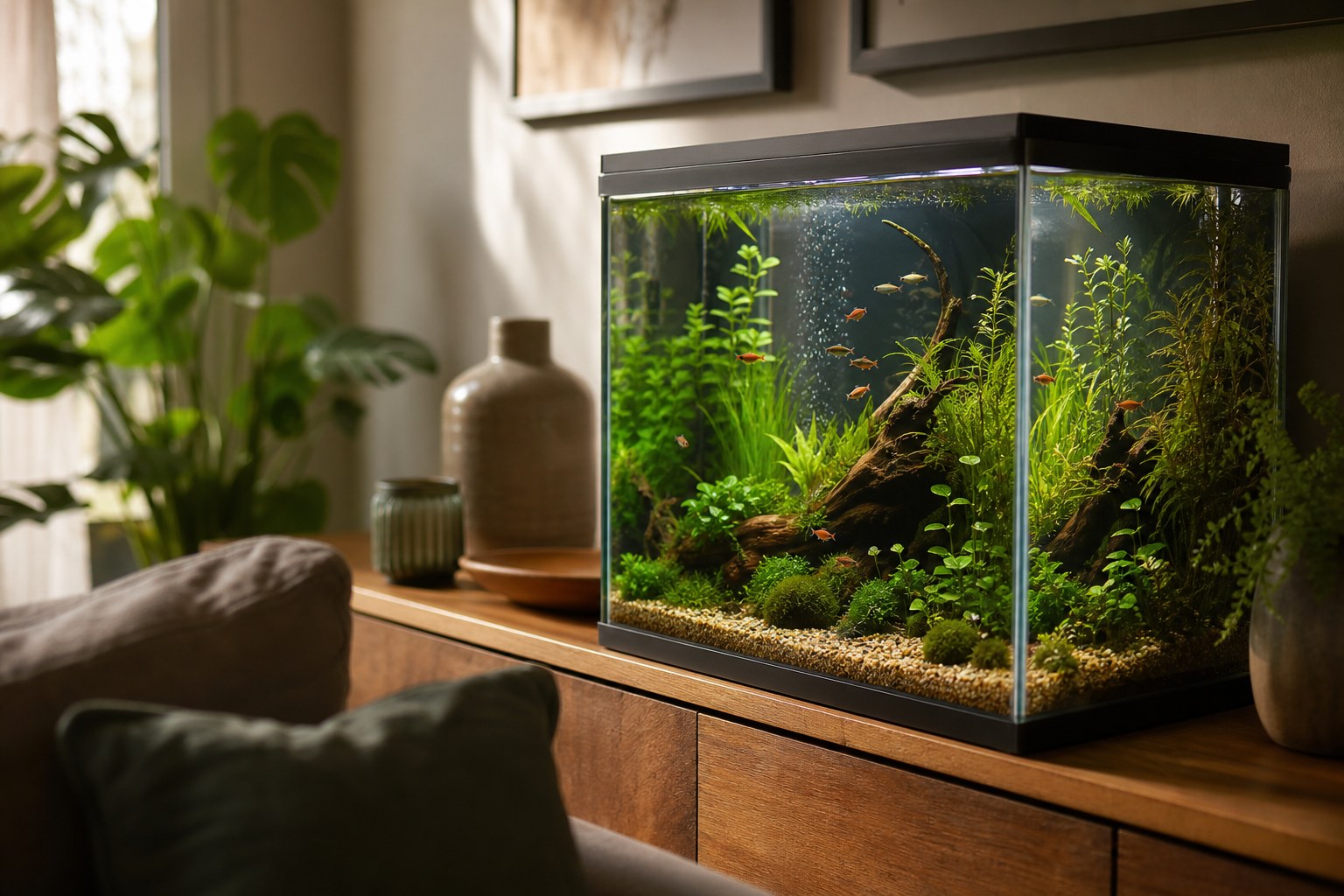
Build the room before you buy the fish
Discus punish cramped, drafty, or high-flow aquaria long before disease shows on a fin. A group that looks peaceful in a shop bag can shred itself overnight in a short, shallow tank where every fish owns the same corner.
UK keepers often inherit community cabinets built for tetras and try to squeeze three juvenile discus into 120 litres. The fish grow; the hierarchy does not. This guide starts with volume and dimensions, then filtration, substrate, and tank mates—so the hardware matches the biology before the first water change of a new group.
If you are still choosing heaters and test kits for soft, warm water, pair this article with our water parameters guide. Aggression management and lighting sit downstream of a tank that is simply big enough.
The setup in one paragraph
Use at least 75 gallons / 284 litres for five to six adults, with a footprint around 4 feet long and 2 feet high (roughly 120 × 60 × 60 cm). Filter heavily for biological capacity, return water gently, keep ammonia and nitrite at zero, and stock peaceful mid-water dither fish rather than nippy or tiny tank mates. Bare bottom suits breeding and grow-out; planted suits display if you can keep mulm under control.
Minimum size and why 75 gallons matters
A settled group of five to six adult discus needs roughly 75 gallons / 284 litres as a practical UK minimum. That volume softens temperature swings, dilutes waste from frequent feeding, and gives subordinates room to escape dominant fish.
Quarantine and hospital tanks can be smaller—40–60 litres for individuals—but do not confuse temporary housing with a permanent shoal display. Grow-out racks for juveniles often use 60–100 litre bare tanks with intense water changes; those systems succeed because of labour, not because discus prefer small boxes.
When shopping second-hand UK tanks, measure internal water height, not the cabinet brochure. A “four-foot” tank that is only 40 cm tall forces adult discus into unnatural body angles and concentrates aggression along the substrate line.
Dimensions: length, height and body shape
Aim for at least 4 feet / 120 cm of length and 2 feet / 60 cm of height for adults. Discus are laterally compressed and deep-bodied; they patrol mid-water in a loose shoal and use vertical space to show status without constant chasing.
Short, tall “tower” tanks fail for groups because fish cannot space themselves along a long axis. Long, shallow tanks fail because adults cannot hang comfortably and plant-heavy scapes steal swimming lanes. The classic discus footprint is a rectangle that looks closer to a community tank for large tetras than a low aquascape for shrimp.
Shoaling behaviour is not optional decoration. Lone discus or pairs in huge empty tanks often pace; groups of five or more settle hierarchy faster when the tank is long enough for a clear dominant zone and quieter corners. If your room only fits a three-foot cabinet, reconsider stocking density or keep juveniles only until you can upgrade.
Substrate: bare bottom versus planted
Bare-bottom tanks remain popular with breeders because faeces and uneaten beef heart are obvious, siphoning is fast, and there is nowhere for pathogens to hide in gravel. Painted exteriors or thin PVC underlays hide the glass look without trapping mulm.
Planted discus tanks are absolutely viable for display keepers who feed carefully and vacuum weekly. Soften hardscape so caves do not create territorial bottlenecks. Prefer tall stem plants and floating cover over dense carpeting that traps waste. Amazon swords, Vallisneria, and large Anubias tolerate the warmth if lighting is moderate and fertiliser is restrained—discus dislike bright, nutrient-chaotic scapes more than they dislike a few leaves.
Sand can work if you keep it thin and siphon routinely; deep gravel beds in warm, heavily fed tanks become nitrate factories. Whatever you choose, design cleaning access on day one. A beautiful scape you cannot vacuum will undo your filtration plan.
Filtration and gentle flow
Discus produce a lot of waste on high-protein diets and live at temperatures that accelerate metabolism. Prioritise biological media volume—canister filters, sumps, or oversized hang-on systems with sponge prefilters—over raw “turnover” marketing numbers.
Target several times tank volume per hour through the filter media, then soften the return. Spray bars, lily pipes aimed along the long wall, or baffled outlets keep oxygen moving without creating a white-water river. Discus prefer low to moderate flow; fish pinned behind wood are telling you the return is wrong, not that the species is “shy.”
Service habits matter more than brand. Rinse mechanical sponges in old tank water fortnightly when feeding heavily. Never sterilise all bio media at once. In UK hard-tap regions, combine filtration with RO blending as covered in the water quality guide—filtration cannot fix chronic hardness stress alone.
Choosing tank mates that calm the shoal
Compatible companions are peaceful, mid-water or lower fish that ignore discus slime and do not compete aggressively at feeding time. Cardinal tetras, carefully selected ram cichlids, Apistogramma species in large footprints, and suitably sized clown loaches in very large systems appear repeatedly in successful community discus tanks.
Incompatible choices include tiny fish that fit in an adult discus mouth, fin-nippers, hyperactive barbs, and large aggressive cichlids. Discus will eat small tetras and shrimp given the chance. Boisterous bottom cleaners that dart through feeding zones increase stress even when they never bite.
Add dither fish after the discus settle, not before—new discus already manage hierarchy. Watch feeding: dither fish should draw discus into the open without stealing every pellet. If aggression spikes, increase group size of discus themselves before adding more species; lonely pairs fight more than proper shoals.
Equipment layout for a four-foot discus tank
Place dual heaters at opposite ends on diagonal corners so warm water mixes through the long axis. If both sticks sit behind one piece of wood, the far end can sit a full degree cooler—enough to nudge subordinates into the warm pocket and restart chasing.
Return spray bars along the back glass create a gentle oval current. Aim outlets slightly downward so surface film breaks without a white-water boil at the front viewing pane. Canister intakes belong behind a sponge prefilter in a rear corner; discus learn to rest in quieter front thirds when flow is honest.
Cable management matters in warm rooms. Trailing heater cords across the substrate become rest spots that fish defend. Clip cords high. Label every plug at the socket strip so you can kill lights without killing filtration during a heatwave drill.
Stand and cabinet strength is not optional. Water weighs roughly one kilogram per litre; a 284 litre fill plus substrate, rock and sump plumbing exceeds many flat-pack TV cabinets. Use aquarium-rated stands, check floors for bounce, and leave service access behind the tank—UK terraced rooms often force tanks hard against walls, which makes hose changes miserable six months later.
Quarantine footprint belongs in the same plan. A separate 60–100 litre heated tank with its own sponge filter prevents the classic error of cycling newcomers in a plastic tub beside the display. If you lack space for quarantine, delay buying fish until you do. Discus stock from mixed wholesaler systems is not “already quarantined” because it looked clean in the shop.
Stocking sequence and common setup mistakes
Cycle fully before discus arrive. Transferring mature media helps, but still test ammonia and nitrite for a week with a light ammonia dose or fishless method. Adding six expensive adults to a “cycled” community filter that previously held six tetras often fails because warm, protein-heavy feeding multiplies bioload overnight.
Introduce a true group in one go when possible. Dribbling singles weekly resets hierarchy and multiplies aggression tickets. Match sizes closely; one giant among five mediums recreates schoolyard bullying with fins.
Avoid the decorative cave labyrinth. Discus need open mid-water and a few tall breaks for line-of-sight, not a pleco fortress. Avoid sharp slate edges at discus body height. Avoid sand so deep that anaerobic pockets form under uneaten beef heart.
Incompatible tank mates deserve a blunt list: tiger barbs and other nippers; tiny neon tetras as long-term companions for large adults; territorial Oscars or larger Central American cichlids; hyperactive giant danios in short tanks; unquarantined wild-caught oddballs that hitchhike parasites. Compatible lists are not permission to overstock—every dither fish still eats oxygen and produces waste at 29°C.
Re-scape after fish settle only when managing aggression. Constant décor changes stress shoals. When you do rearrange, do it thoroughly so territories reset, then leave the layout alone for weeks while you judge behaviour at feeding time.
Weekly maintenance rhythm for discus displays
A practical UK week looks like this: daily glance at temperature, breathing rate and leftover food; two to three intentional feeds with belly checks; one larger water change of 15–25% (more if nitrates climb); sponge prefilter rinse in old tank water when flow drops; glass clean before the weekend guests arrive so you actually see fish colour.
Monthly: test GH/KH if you blend RO, inspect heater suckers, shake canister hoses for sludge, and replace thermometer batteries. Quarterly: deeper media maintenance without sterilising every basket at once.
Write parameters on a card inside the cabinet door—target temperature, RO blend ratio, last filter service. Future you, or a fish-sitter, should not reverse-engineer your system from a cryptic Amazon order history.
Space first, then polish
A correctly sized, gently filtered tank will forgive early feeding mistakes. An undersized showpiece will not. Measure your room, buy the largest stable footprint you can service, plan dual heaters and a thermometer you trust, then stock a true group.
Next steps: lock water parameters, set a feeding routine, and read the aggression guide before problems look like “mystery disease.” Discus keeping rewards patience at the glass and discipline with the bucket.
Recommended gear
Best overall
External Canister Filter 1200 L/h
Fluval
Usually £120–£180
Strong bio capacity for warm, protein-heavy discus tanks without blasting the water column—pair with spray-bar returns aimed along the glass.
View on Amazon (paid link) (paid link)Premium pick
Dual Heater Pack 300W
Eheim
Usually £45–£70 each
Running two heaters at half load is safer than one oversized stick when room temperature swings—essential for 28–30°C discus water.
View on Amazon (paid link) (paid link)Budget pick
Large Sponge Prefilter Bundle
Aquael
Usually £12–£20
Cheap insurance on canister intakes when feeding beef heart and pellets—cuts mechanical clogging without adding harsh current.
View on Amazon (paid link) (paid link)Also consider
Aquarium Thermometer Dual Sensor
Generic
Usually under £15
Digital stick-ons fail; a dual probe lets you check opposite ends of a four-foot tank during heatwaves and heater faults.
View on Amazon (paid link) (paid link)
Common questions
What is the minimum tank size for discus?
Plan for at least 75 gallons / 284 litres for a settled group of five to six adults. Smaller volumes work briefly for quarantine or grow-out, but adult shoals need that footprint for hierarchy and swimming height.
Why do discus need tall tanks?
Adult discus are deep-bodied and shoal mid-water. A tank at least 2 feet / 60 cm high gives vertical space for natural posture, reduces surface crowding, and softens the impact of territorial disputes.
Is bare bottom better than planted for discus?
Bare-bottom tanks make waste visible and water changes faster—ideal for grow-out and breeding. Planted displays look better and buffer stress, but demand careful feeding and stronger mechanical filtration so mulm does not hide under décor.
Can discus live with cardinal tetras?
Yes—cardinal tetras are classic dither fish for discus, provided the tank is large, warm enough (cardinals tolerate the upper twenties), and you avoid tiny nano tetras that adult discus may eat.
How much flow do discus prefer?
Low to moderate. Aim for thorough turnover through the filter, not a river current. Spray bars aimed along the long glass wall create circulation without pinning fish against décor.