GuideDiscus
Lighting for Discus Colour and Health
Spectrum, intensity, photoperiod and planted-tank compromises
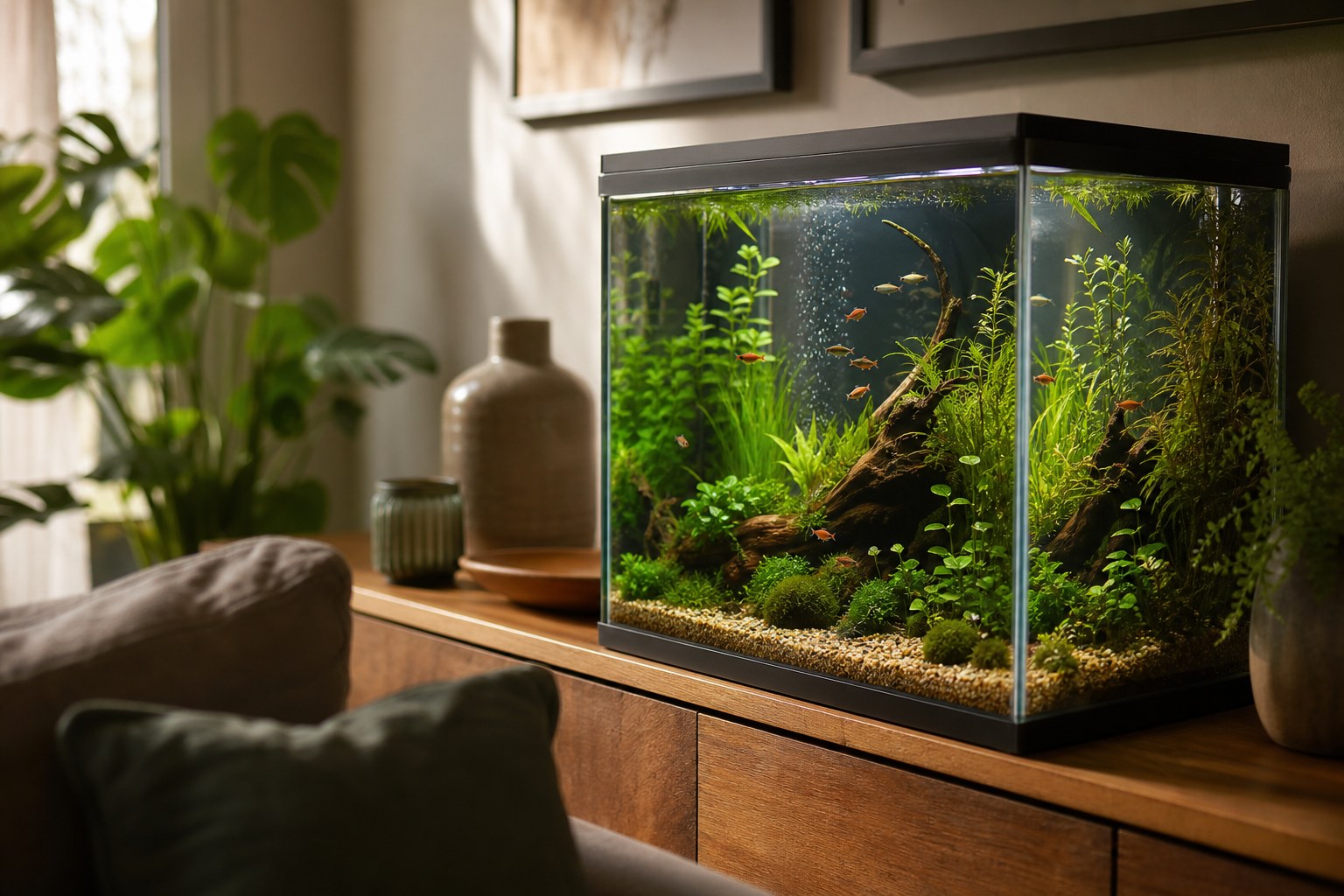
Light shows colour; darkness keeps health
Discus photographs lie. A tank blasted with high-CRI spotlights looks electric for a camera and exhausting for the fish. Good discus lighting is moderate, full-spectrum, timed, and followed by real night.
This guide covers spectrum, intensity, photoperiod, dimming, and the planted-tank compromise UK aquascapers hit when they want both red fish and green carpets.
Lighting rules of thumb
Use dimmable full-spectrum LEDs at moderate intensity, run roughly 10–12 hours daily with true darkness afterward, prefer gradual on/off transitions, and never sacrifice oxygen and heat management during summer just to keep plants racing.
Spectrum, colour pop and intensity
Full-spectrum LEDs remain the practical UK default. They support viewing and plant maintenance without the heat of old T5 banks. “Colour-enhancing” channels that emphasise red can make discus pop—use them as a spice, not the whole meal.
Intensity should be moderate. Discus evolved under filtered, often tannin-stained light. Bright open-top scapes drive fish into corners until lights dim. If you need high PAR for carpets, create shaded swimming lanes with floating plants or hardscape.
Watch behaviour for a week after any light upgrade. Improved colour with calm shoaling is success; improved colour with clamped fins is makeup on stress.
Photoperiod, darkness and timers
Set 10–12 hours on and 12–14 hours off. Consistency matters more than the exact hour you choose. Use a timer; manual switching slips during busy UK winters.
Discus need dark periods for rest and stress reduction. Room lamps, TV glare, and all-night corridor lights count as photoperiod pollution—add a background or move the tank if needed.
Dimmable lights or sunrise/sunset controllers soften transitions. Sudden noon-bright switches startle fish into glass and trigger aggression spikes. In heatwaves, shorten photoperiod and intensity to cut heat load—see the heatwave guide.
Practical light recommendations
Pick a ramp or bar that covers the tank length evenly, offers dimming, and has replaceable drivers where possible. Avoid unused RGB demo modes that flash. Measure success by fish behaviour and your ability to see waste on the substrate—not by social-media saturation.
Spare timers are cheap insurance. After power cuts, confirm clocks reset. BST changes have silently extended days in more than one fish house.
Evaluating lights without believing the box
Ignore “super bright for lush plants” claims if your priority is discus comfort. Look for dimming range, even spread, modest heat output, and a spectrum that does not turn fish into fluorescent cartoons unless you want that for short photo sessions.
Mount height changes intensity. Raising a light a few centimetres and adding floating plants often fixes hiding better than buying a new unit. Measure success by whether discus occupy mid-water at noon, not only at dusk.
RGB demo modes belong off. Flicker from cheap drivers stresses fish and photographers alike—buy from makers with aquarium reputations where you can.
Replace fading LEDs on schedule. A five-year-old bar that looks “fine” may have shifted spectrum and encouraged algae while washing out reds. Your phone camera’s auto-white-balance hides the problem until you see fish under daylight near a window.
Planted discus compromises that work
Favour warm-tolerant, moderate-light plants: Amazon swords, Vallisneria, large Anubias, Java fern on wood, and limited floating cover such as frogbit. Skip demanding carpet species unless you can shade the open water column.
Fertilise cautiously. Discus tanks already carry nutrients from heavy feeding; dumping aquascaping fertiliser routines on top invites algae and parameter surprises. Root tabs under swords often beat column dosing.
CO2 injection raises plant growth and pH swing risk in soft water. If you use CO2, monitor pH stability ruthlessly and ensure surface gas exchange remains strong—especially in summer.
Aquascape for service: leave siphon lanes, do not bury the heater behind immovable rock, and keep a clear viewing path so you notice early disease.
Floating plants are a discus keeper’s friend—they diffuse light, reduce startle, and cut heat load slightly—while still allowing a bright patch for plant growth at the rear.
Photoperiod discipline in family rooms
Put the tank on a timer even if the room lights stay on later—use a background and side panels to cut spill. Teach household members that “just leaving the aquarium light on for company” undoes rest cycles.
Align feeding with lights-on periods so shy fish learn the schedule. Avoid late-night feeds under bright light that extend the day accidentally.
During UK heatwaves, shorten photoperiod first; it costs nothing and reduces heat. After storms and power cuts, check timers—many reset to always-on and cook tanks silently.
Keep a written schedule on the cabinet: on 08:00, off 19:00 (example), dim ramp 30 minutes. Boring schedules grow confident fish.
Colour, stress and the myth of permanent daylight
Discus show best colour when settled, well fed, and unbullied. Light reveals that colour; it does not invent it. A stressed fish under perfect spectrum still looks wrong—fix the husbandry levers first.
Permanent daylight from room spill creates chronic low-level cortisol stories: washed colour, skittishness, algae, and skipped rest. Black backgrounds often improve perceived colour and calm by reducing reflections that trigger lateral displays against “rival” fish in the glass.
Moonlight LED features are optional entertainment. If they keep the tank bright enough to read by, they are not moonlight. True darkness remains the goal for the bulk of the night.
Seasonal UK daylight through windows can overpower your timer in June and vanish in December. Orient tanks to avoid midday sun beams that overheat and bleach—sun is a heatwave accomplice.
Maintenance tasks tied to lighting
Clean glass before you judge colour. Film and green dust mute reds more than any spectrum complaint. Align filter maintenance so you are not stirring mulm into the water column right before guests photograph the tank.
Check that timers survive power cuts. Confirm BST changes twice a year. Inspect diodes for partial failure—dark patches on a ramp create odd shadows fish treat as territories.
When upgrading lights, dim to 40–50% for the first week and raise gradually while watching behaviour. Sudden intensity upgrades are a classic “my discus went dark” report.
A simple lighting brief for new discus tanks
- Choose dimmable full-spectrum coverage for tank length. 2) Set 10–12 hour timer. 3) Add background. 4) Start modest intensity. 5) Add floaters if fish hide. 6) Only then fine-tune colour channels for viewing. 7) Write the schedule on the cabinet.
Revisit after heatwaves, redecorating, and adding plants. Lighting is part of the life-support envelope, not a separate aquascaping hobby bolted on top of suffering fish.
Algae, biofilm and light as a diagnostic
Green glass with healthy discus often means too much light or too many nutrients from feeding—not necessarily “bad spectrum.” Reduce photoperiod an hour, add floaters, and vacuum. Brown diatoms on new tanks are common; they are not a reason to blast intensity higher.
Black beard algae on hardscape under strong light frustrates planted discus keepers. Remember the fish tolerate lower light than the algae enjoys—dimming is a valid fix.
Biofilm on the surface under weak circulation looks worse under bright LEDs. Fix flow and skimming before blaming the lamp brand.
Use lighting changes as one diagnostic dial among many. If fish colour improves when you dim, you found stress lighting. If nothing changes, look at water and diet next.
Keep spare timer and driver where you can find them. Lighting failure at 05:00 on a summer morning with full sun through the window is a heat and algae event waiting to happen.
Coordinating light with heatwave and maintenance calendars
In Met Office heat alerts, shorten photoperiod first day—before fans if you can only do one thing quickly while leaving the house. After filter maintenance that stirred mulm, consider a slightly shorter bright period that day so algae does not party in the nutrient spike.
After power cuts, verify clock time and intensity presets. Some controllers boot at 100% brightness—dim immediately.
Align family movie nights and room lamps so the aquarium is not the only light source left on until 1 a.m. Discus rest is part of colour and immune function, not optional aesthetics.
Calm light, rich colour
Colour follows health and genetics first; lighting only reveals what husbandry built. Keep days predictable, nights dark, and intensity humble. Your discus should look good at dinner time—not only in a one-second phone burst.
Recommended gear
Best overall
Full-Spectrum LED Ramp Light
Various
Usually £40–£90
Even coverage along a four-foot tank without aquarium-shop disco modes—look for adjustable output more than RGB gimmicks.
View on Amazon (paid link) (paid link)Budget pick
In-Line Lamp Timer / Smart Plug
Various
Usually £8–£25
Consistent 10–12 hour days beat manual switching—discus notice chaotic photoperiods as stress.
View on Amazon (paid link) (paid link)Premium pick
LED Controller with Sunrise/Sunset
Various
Usually £30–£70
Gradual ramps reduce startle responses and look premium—worth it on display tanks near living spaces.
View on Amazon (paid link) (paid link)
Common questions
What spectrum is best for discus?
Full-spectrum LEDs that render reds and blues honestly without extreme magenta blasts. Colour-enhancing modes help photographs; moderate, natural-looking light helps fish long-term.
How bright should the tank be?
Moderate. Discus prefer subdued lighting compared with high-tech plant tanks. If fish hide all day and only colour up at dusk, the light is probably too intense.
How long should lights stay on?
About 10–12 hours on, with 12–14 hours of genuine darkness. Do not leave living-room lamps substituting for a photoperiod.
Why do discus need darkness?
Dark periods reduce stress, support immune function, and allow natural rest. Constant light from room spill creates chronic low-level stress and washed-out colour.
Can I keep a planted discus tank?
Yes—choose plants that tolerate moderate light and warmth, or use localised higher light away from open swimming lanes. Do not cook discus under plant-only lighting regimes.