ComparisonEquipment
Canister Filter vs Internal Filter
Cabinet quiet versus in-tank simplicity—pick your maintenance personality
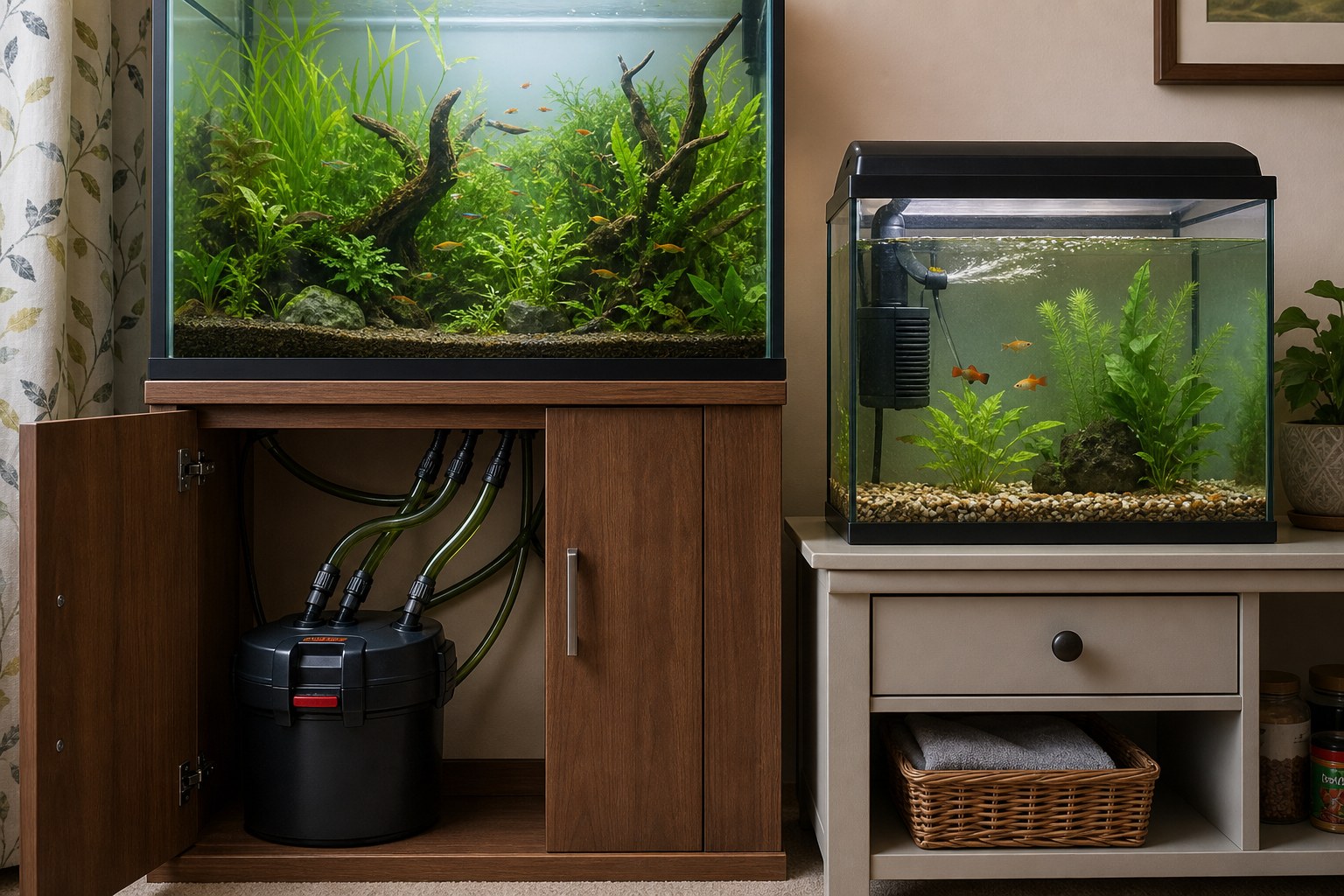
Filtration style follows your tolerance for hoses
Canisters whisper from a cabinet if you service them. Internals gurgle in the corner but come out for a rinse without disconnecting plumbing.
A keeper upgrading to their first canister described priming failure on a Sunday evening—water across the kitchen lino until a club member walked them through filling the hoses on a video call. They kept the canister; they never skipped the checklist again.
Neither fixes overstocking. Both need media rinsed in tank water, not tap.
Which should you choose?
Under 90 litres in a bedroom: internal or hang-on-back. Over 120 litres with a cabinet: canister. Between: choose based on whether you prefer hidden plumbing or five-minute rinses. Renters often favour internals—less permanent cabinet drilling.
Comparison at a glance
| Spec | Fluval 207 Canister Filter | Fluval U3 Internal Filter | Eheim Classic 2213 |
|---|---|---|---|
| flowLph | 780 | 600 | 440 |
| type | canister | internal | canister |
Options compared
Best overall
Fluval 207 Canister Filter
Fluval
Usually £120–£150
Strong flow and modular baskets for 120–220 litre tanks—priming frustration pushes beginners back to internals unless someone shows them once.
More on this pick
Best for: Large community tanks with cabinet space
Avoid if: Bedroom nano tanks
Pros- High media volume; quiet when maintained
Cons- Priming learning curve; hose mess on service
View on Amazon (paid link) (paid link)Also consider
Fluval U3 Internal Filter
Fluval
Usually £35–£45
Three media stages in a visible corner—looks industrial in display tanks but rinses in ten minutes at the sink.
More on this pick
Best for: Renters and 60–90 litre community setups
Avoid if: Heavy stocking in 150+ litre tanks
Pros- Simple install; easy rinse access
Cons- Visible in tank; limited media vs canister
View on Amazon (paid link) (paid link)Premium pick
Eheim Classic 2213
Eheim
Usually £100–£130
Decades of UK parts support—old-school clips and hoses feel fiddly compared with modern snap-lock rivals.
More on this pick
Best for: Keepers wanting long-term parts availability
Avoid if: Tight budgets under £80
Pros- Parts availability; steady flow
Cons- Fiddly service; dated design
View on Amazon (paid link) (paid link)
Side-by-side at a glance
Canisters win media volume and aesthetics; internals win access and upfront cost. Maintenance frequency favours neither if you neglect both equally.
What matters most in filter style
Turnover target four to six times tank volume per hour for community tropicals. Media access determines whether you actually clean on schedule.
Spare parts availability in UK shops matters when clips crack at year three.
Living with each type
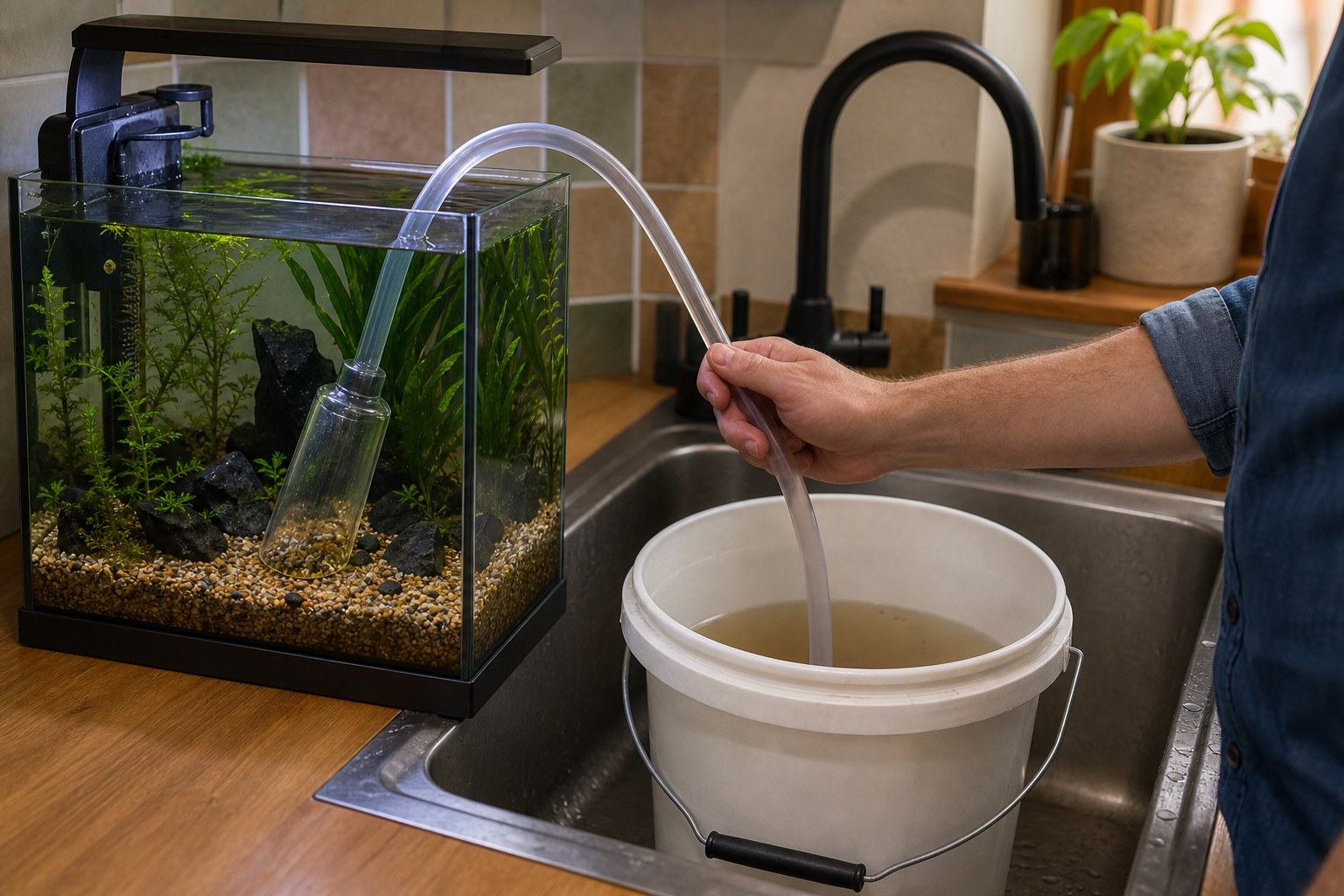
Canister service day spreads across the kitchen floor. Internal service fits in a lunch break. Neither is wrong—busy keepers often run internals; display keepers hide canisters.
A renter we spoke with chose an internal specifically because they could not drill the landlord's cabinet for hoses—they rinse it in the sink every fortnight and accept the corner bulge in the aquascape.
First canister priming frustrates everyone once. Watch one YouTube walkthrough with your exact model, then it becomes routine.
Noise and cabinet fit
Canister vibration transfers through cabinet floors—foam pad under the unit helps. Internal spray bar angle controls surface ripple and bedroom noise.
Measure cabinet height before buying a canister—some classics are taller than IKEA shelves expect.
Final thoughts
Buy for maintenance you will actually do. A rinsed internal beats a neglected canister every time.
Upgrade when stocking and mess outgrow rinse convenience—not when a sale banner flashes.
Common questions
Is a canister filter overkill for a 60 litre tank?
Usually yes. A quality internal or hang-on-back matches turnover needs with less maintenance overhead.
How often should I clean a canister filter?
Every two to three months for community tanks, or when flow drops ten to twenty percent. Rinse media in tank water only.
Can I run both internal and canister together?
Yes during upgrades or for heavy bioload. Ensure combined turnover does not blast fish with excessive current.