RoundupFish care
Best Auto Feeders for Holidays and Weekend Trips
Dispensers for when the neighbour should not hold your spare key and your flake jar
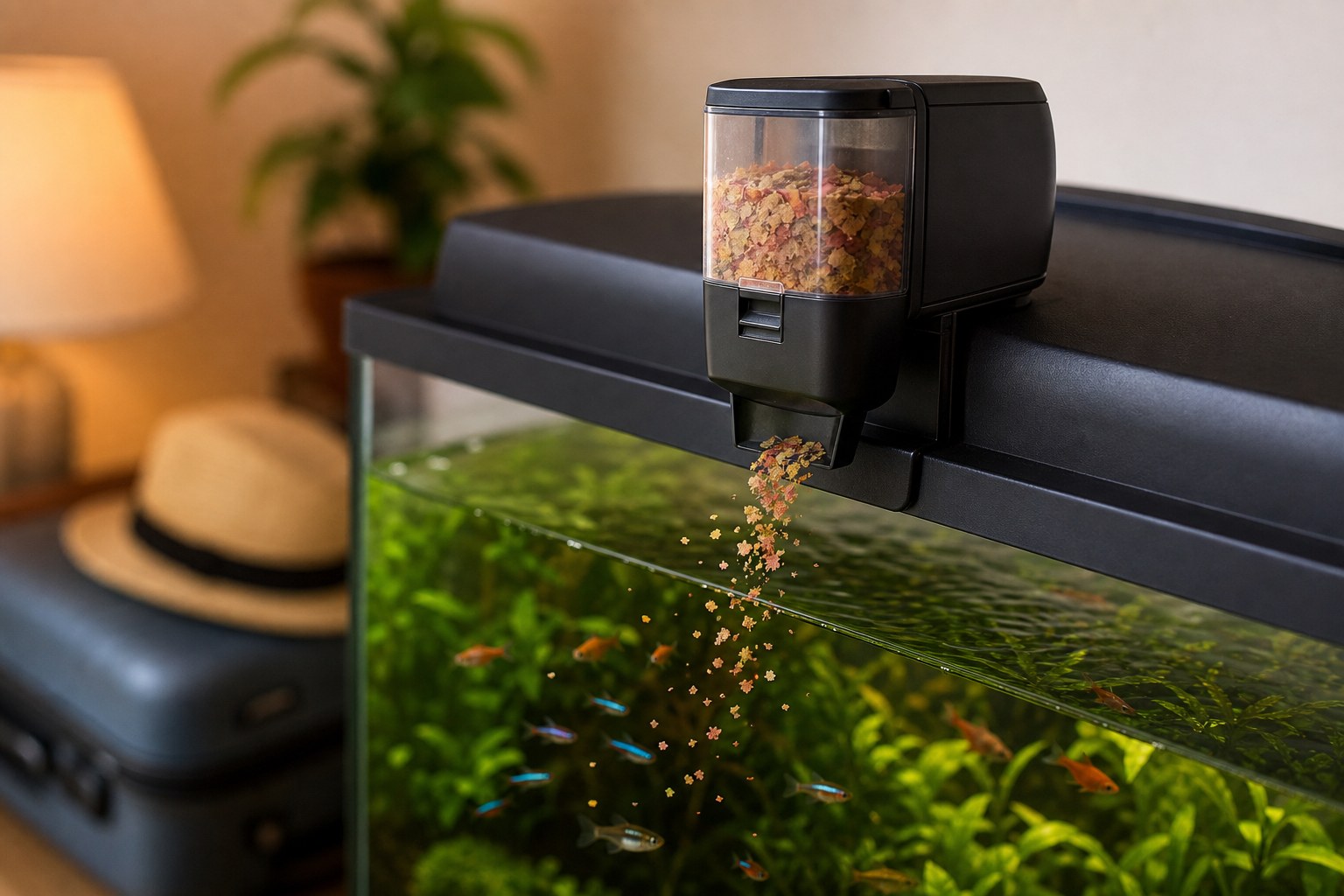
Fish survive missed meals better than missed water quality
Weekend away? Your mature community tank is probably fine unfed. Longer trips need a plan that does not rely on a neighbour guessing pinch sizes.
A keeper returning from a bank holiday weekend found their neighbour had 'helped' by sprinkling extra flakes each day—the water was cloudy and nitrate had spiked. The fish survived; the friendship needed a water-change apology.
Auto feeders dispense dry food on a schedule—not magic, not a fish sitter replacement.
Our top pick at a glance
For four to seven days, a reliable drum feeder with dry food tested twice before you leave beats any verbal instructions to a friend. For longer absences, combine a feeder with a trusted check-in or reduce stocking expectations.
Our picks
Best overall
Eheim Twin Feeder
Eheim
Usually £35–£45
Two chambers let you mix pellet sizes—moist foods clump in humidity unless you test before leaving.
View on Amazon (paid link) (paid link)Budget pick
Interpet Fish Feeder
Interpet
Usually £20–£28
Simple programming UK keepers understand—drum slot size limits large pellets.
View on Amazon (paid link) (paid link)Also consider
Fish Mate F14
Fish Mate
Usually £25–£35
Reliable daily rotation for years—mounting clip fits awkward hoods but feels flimsy on curved rims.
View on Amazon (paid link) (paid link)Premium pick
Nemo Matrix Auto Feeder
Nemo
Usually £50–£65
App alerts when hopper runs low—Wi-Fi dependency means no feed if your router reboots mid-holiday.
View on Amazon (paid link) (paid link)
What matters most in auto feeders
Test run for three days before travel. Match slot size to pellet diameter. Moisture is the enemy—silica gel in the hopper helps in humid kitchens.
Feeders we recommend
Picks favour mechanical reliability over app gimmicks for first holiday solutions.
Setting up for success
Mount where splash cannot wet the hopper. Run a dry test into a cup to confirm portion size. Fresh batteries or USB power backup matter—dead batteries mid-weekend are a cliché for a reason.
One keeper came back to an empty hopper that had never rotated—the batteries died on day two of a five-day trip. The fish were fine unfed; the feeder was not. Test for three days before you leave, not three minutes.
Reduce photoperiod slightly to slow metabolism and algae while away.
When a human beats a machine
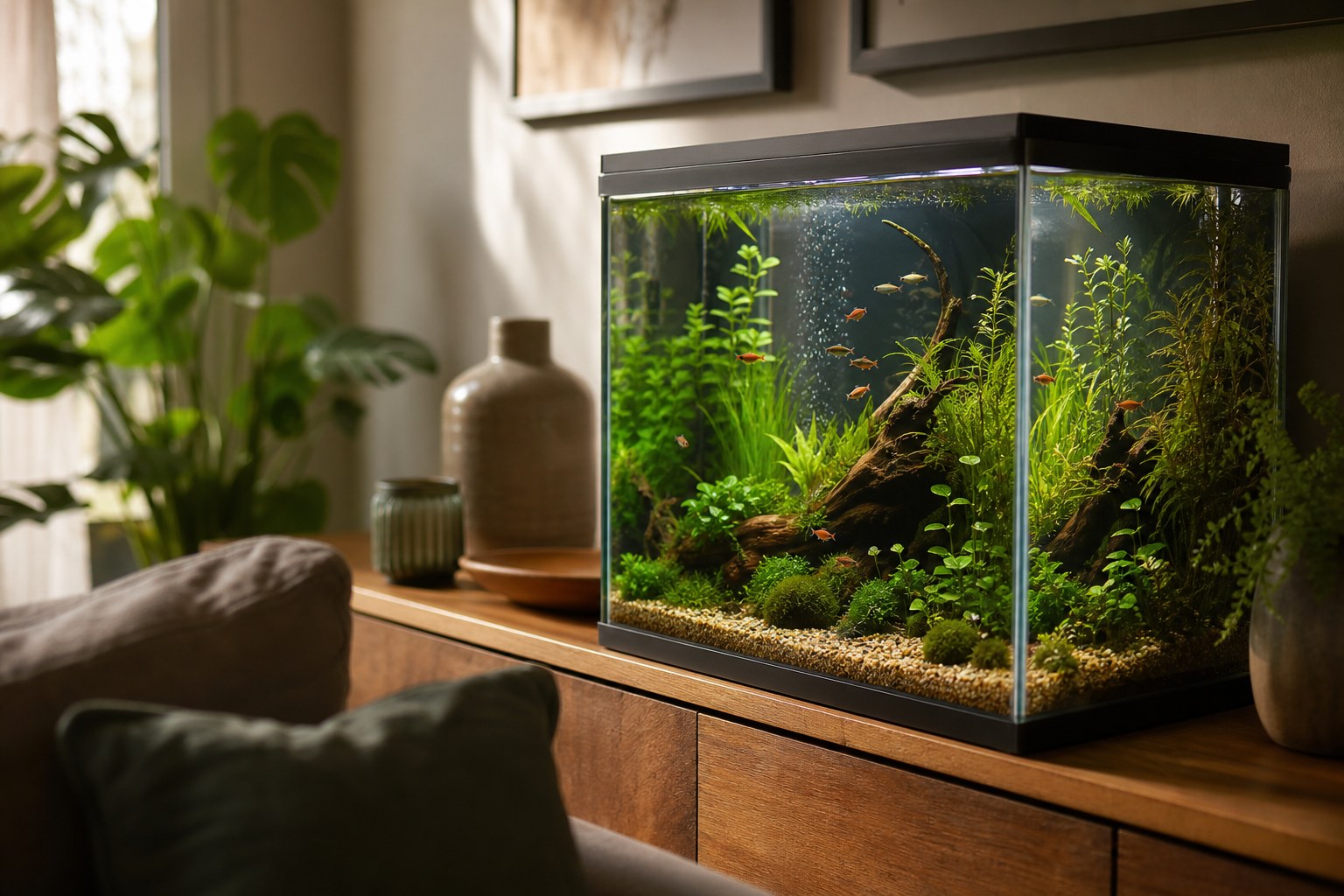
Fortnight holidays in summer heat need someone checking temperature and evaporation. Feeders dispense food; they do not top up water.
Consider professional pet sitters for high-value or sensitive collections.
Final thoughts
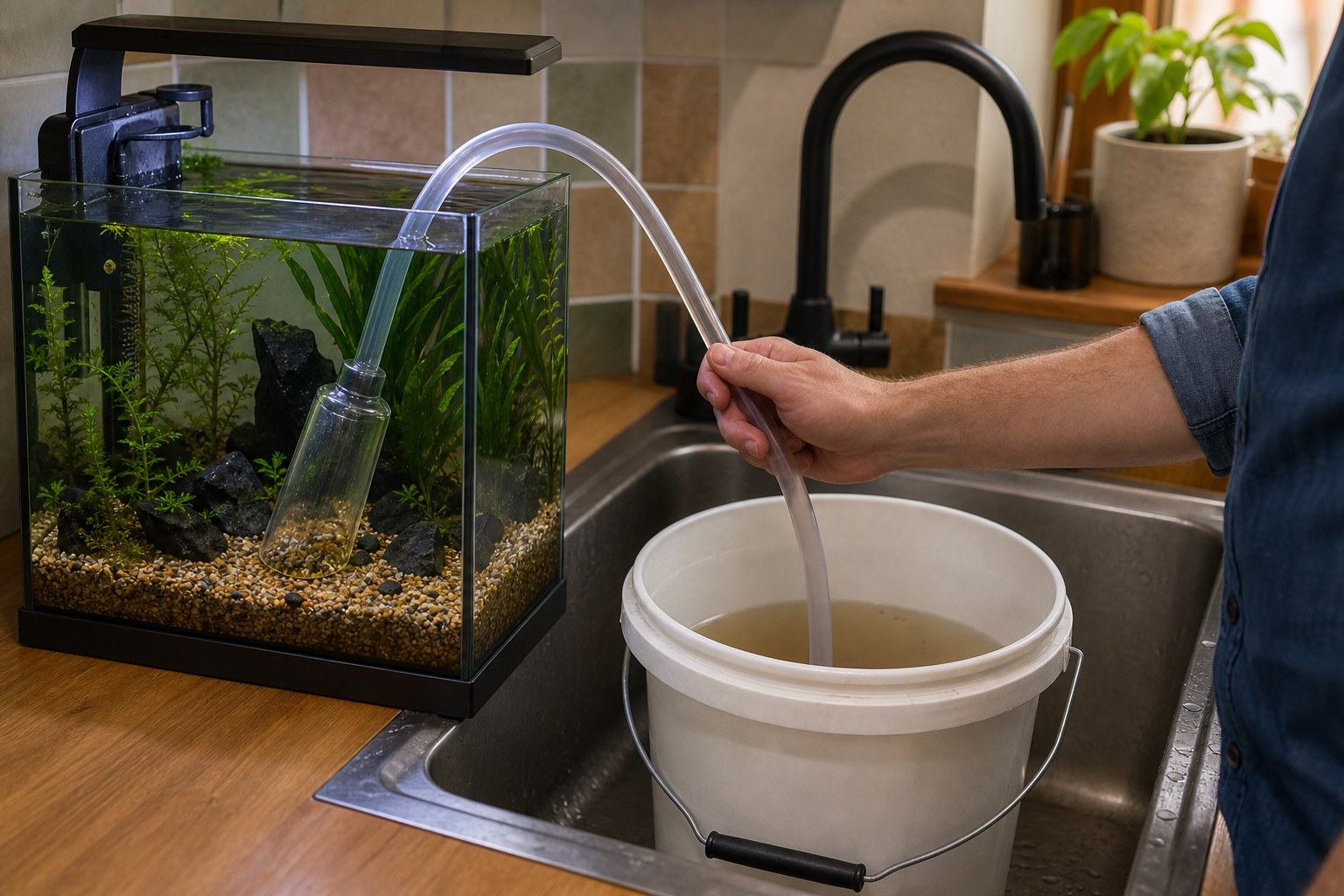
Test before you travel. Feed lightly. Water quality keeps fish alive—not a full hopper.
Return home to a water change before a feast.
Common questions
How long can fish go without feeding?
Healthy adult tropicals tolerate a long weekend easily. A week is often fine in a mature tank with careful pre-trip water change and reduced light.
Should I overfeed before leaving?
No. A large pre-trip feed fouls water while you are away. Do a partial water change and set the feeder to skip a day or feed lightly.
Can auto feeders dispense frozen food?
No. Only dry foods work reliably. Freezing blocks and vacation blocks are separate products with their own risks.